Greasy Bubble Font: Playful 70s Display Type for Handmade Labels & Printables
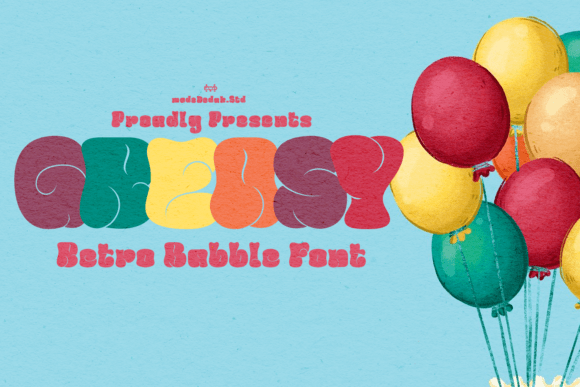
If you’ve ever held a vintage soda bottle, flipped through a sun-faded disco flyer, or admired bold roadside signage from the ’70s—you’ll instantly feel the pulse of Greasy Bubble. This isn’t just another retro font. It’s a display typeface with real personality: bubbly, slightly exaggerated letterforms, subtle grease-pencil texture, and that unmistakable warm, analog charm. As someone who hand-prints candle labels, designs wedding welcome boards, and sells printable party kits on Etsy, I reach for Greasy Bubble when I need energy, nostalgia, and instant visual impact—without sacrificing clarity.
What makes Greasy Bubble especially useful for crafters is how well it balances fun and function. The rounded, inflated shapes hold up beautifully at medium to large sizes—think 24pt and up—and stay legible even when printed small on product tags or die-cut stickers. I’ve used it successfully on 1-inch round sticker labels for bath bombs (with crisp Cricut cut lines), as the headline font on 5x7” printable birthday invitations, and across farmhouse-style wooden signs cut in Silhouette Studio. Its generous x-height and open counters mean it reads clearly on matte paper, kraft cardstock, and even textured canvas tote bags.
For physical product makers, Greasy Bubble shines where first impressions matter most. A candle labeled with Greasy Bubble feels intentional—not trendy, but timelessly joyful. A boutique soap tag using this font signals handmade care and playful branding. Even seasonal items gain emotional resonance: imagine “Summer Vibes Only” in Greasy Bubble on a linen tea towel, or “Let’s Get Disco” on a vinyl decal for a retro-themed baby shower. The font doesn’t scream “vintage”—it invites warmth, celebration, and approachability. That translates directly to customer connection and repeat purchases.
This display font works best for short, high-impact phrases: titles, names, slogans, and decorative headings. Avoid body text or long paragraphs—it’s designed to command attention, not sustain it. That said, its rhythm and spacing make it ideal for layered SVG designs. I often pair Greasy Bubble with a clean sans serif (like Montserrat or Poppins) for contrast—say, Greasy Bubble for “Honey Lavender” and Montserrat Light for the scent description on a label. For wedding stationery, I combine it with a delicate script font (like Allura or Great Vibes) for names, letting Greasy Bubble carry the “Welcome,” “Menu,” or “Thank You” banners. The contrast feels balanced, not chaotic.
When prepping files for cutting machines, keep these practical tips in mind: always convert Greasy Bubble to outlines before exporting SVGs or DXF files—this prevents font substitution issues in Silhouette Studio or Cricut Design Space. For small stickers under 1.5”, stick to uppercase letters only and avoid tight kerning; lowercase ‘g’, ‘y’, and ‘j’ have longer descenders that can get clipped during cutting. On mockups, preview at 100% zoom—some screen displays soften the subtle texture, but print proofs always reveal its true character.
The included file formats matter more than you might think. Greasy Bubble comes in OTF and TTF, both fully compatible with Canva, Adobe Creative Cloud, Procreate (via iOS font installers), and design apps like Affinity Designer. If your shop sells editable templates, confirm the license allows commercial use for digital downloads and SVG-based craft files—that’s non-negotiable. Thankfully, Greasy Bubble is licensed for unlimited physical product sales (mugs, shirts, tags), printable bundles, client work, and even merch sold via third-party platforms. No hidden fees, no per-download caps—just clear, craft-friendly terms.
I’ve used Greasy Bubble across so many projects that it’s become part of my brand shorthand. My holiday cookie packaging uses it for “Sprinkle Magic” above a simple border. My planner sticker sheets feature Greasy Bubble headers like “Goal Getter” and “Weekend Mode.” Even my small-batch hot sauce labels lean into its boldness—“Smoky Boom” looks confident, flavorful, and totally handmade. It’s not a one-trick font. Its versatility lies in how it adapts: slightly bolder for signage, scaled down with tighter tracking for ribbon tags, or softened with a light drop shadow for digital greeting cards.
One thing I appreciate as a seller is how Greasy Bubble supports consistency without feeling repetitive. Because it’s a display font—not a full text family—it encourages thoughtful hierarchy. You won’t be tempted to overuse it. Instead, you reserve it for moments that deserve emphasis: the name on a baby onesie, the title on a printable wall art set, the banner on a farmers’ market chalkboard sign. That restraint actually strengthens brand recognition. Customers start associating that joyful, rounded energy with your shop—especially when paired with consistent color palettes and supporting design elements.
And yes—it handles multilingual accents cleanly. I’ve tested it with French and Spanish characters (é, ñ, ü) in invitation suites, and all diacritics render crisply in both print and PDF previews. No missing glyphs, no awkward spacing. That matters when you’re designing bilingual wedding programs or selling printable kits to international buyers.
If you’re building a cohesive product line—whether it’s seasonal SVG bundles, printable planner pages, or custom-label kits—Greasy Bubble adds instant character while staying commercially reliable. It’s not overly ornate, not too niche, and never dated in a way that limits appeal. It’s the kind of premium font that makes customers pause, smile, and remember your brand—not because it’s flashy, but because it feels human, nostalgic, and full of life. Keep it for your headlines, your labels, your signs, your celebrations. Let everything else support it. That’s how great typography serves your craft—and your customers.